
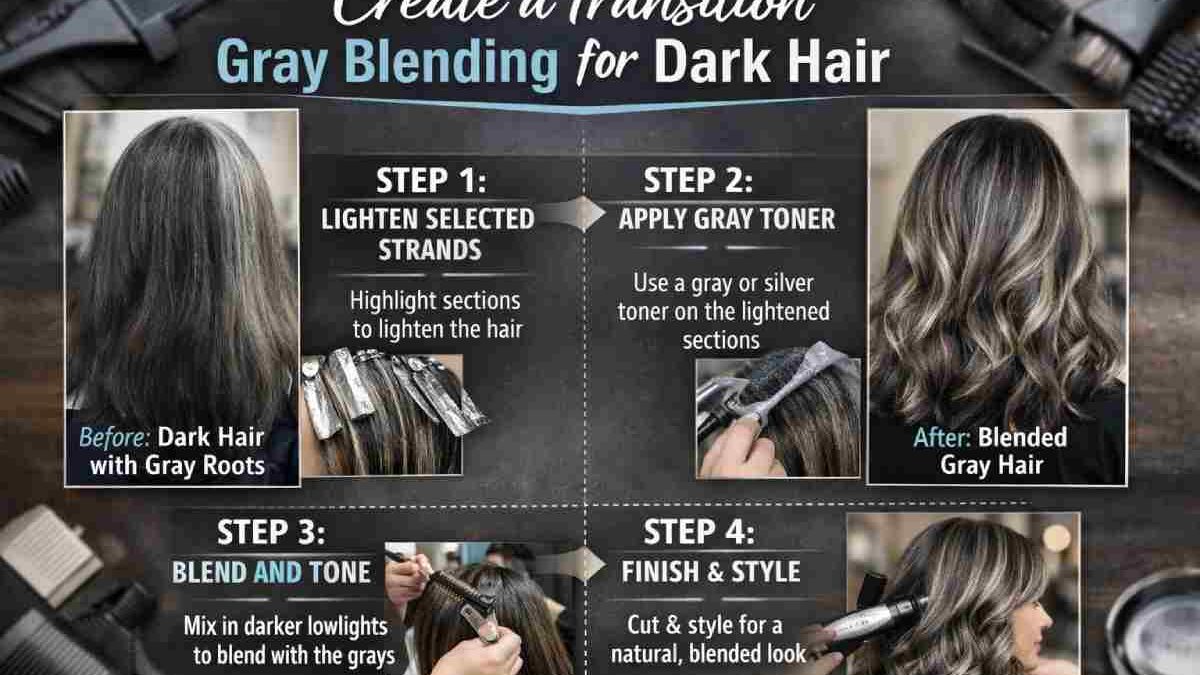
Table of Contents
Introduction
The transition to gray hair has become a major beauty trend across the United States, especially among individuals who prefer a natural and low-maintenance look. Instead of repeatedly covering gray strands with permanent dye, many are now choosing gray blending techniques that integrate silver tones into their natural hair color.
For people with dark hair, this transition can feel more challenging because the contrast between deep brown or black hair and gray strands is more noticeable. However, modern salon techniques such as balayage, highlights, and toning have made it possible to achieve a seamless, elegant blend. This guide explains everything you need to know about transition gray blending for dark hair, including techniques, costs, timelines, and maintenance strategies.
What Is Gray Blending?
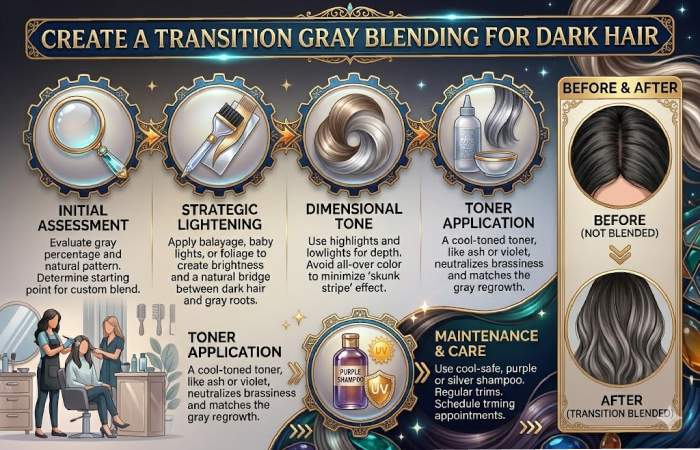
Gray blending is a hair coloring technique that softens the contrast between natural gray hair and darker strands. Instead of fully covering gray hair, stylists strategically place lighter and darker tones to create a natural, multi-dimensional appearance.
This approach is particularly useful for individuals who want to transition away from full hair dye while avoiding harsh root lines. It allows gray hair to grow in gracefully, blending it with the rest of the hair for a cohesive look.
Why Gray Blending Is Popular in the U.S.
Across the United States, beauty trends are shifting toward authenticity and convenience. Gray blending reflects this shift by offering a solution that is both stylish and practical. Many people are embracing their natural aging process while still maintaining a polished appearance.
This method has gained popularity because it reduces the need for frequent salon visits, minimizes hair damage, and creates a softer, more natural finish compared to traditional dyeing. Social media trends and celebrity influence have also contributed to its widespread adoption.
Challenges of Transitioning from Dark Hair
Transitioning to gray hair from a dark base color requires careful planning. The strong contrast between dark hair and gray strands can make the transition appear uneven if not handled correctly.
Stylists typically recommend gradual lightening techniques combined with toning to ensure a smooth blend. This process may take several months but results in a more natural and long-lasting look.
Key Challenges and Solutions
| Challenge | Explanation | Solution |
| High Contrast | Dark vs gray creates visible lines | Use highlights and balayage |
| Slow Transition | Takes time for natural gray to grow | Multi-session blending approach |
| Brassiness | Warm tones appear during lightening | Apply toner or purple shampoo |
| Hair Damage Risk | Repeated processing weakens hair | Use conditioning treatments |
Techniques Used in Gray Blending
Professional stylists use a combination of techniques to achieve a seamless gray blend. Each method serves a specific purpose and is customized based on the client’s hair type and goals.
Highlights are used to lighten sections of hair, mimicking the look of natural gray strands. Lowlights, on the other hand, add depth and dimension by incorporating darker tones. Balayage provides a soft gradient effect, while baby lights create a subtle, natural blend. Toners and gloss treatments refine the final color and eliminate unwanted hues.
Gray Blending Techniques Overview
| Technique | Purpose | Best For | Maintenance |
| Highlights | Lighten strands | Early gray transition | Medium |
| Lowlights | Add depth | Balancing tones | Low |
| Balayage | Gradient blending | Natural finish | Low |
| Babylights | Fine detailing | Subtle gray distribution | Medium |
| Toner/Gloss | Color correction | All stages | Low |
Step-by-Step Transition Process
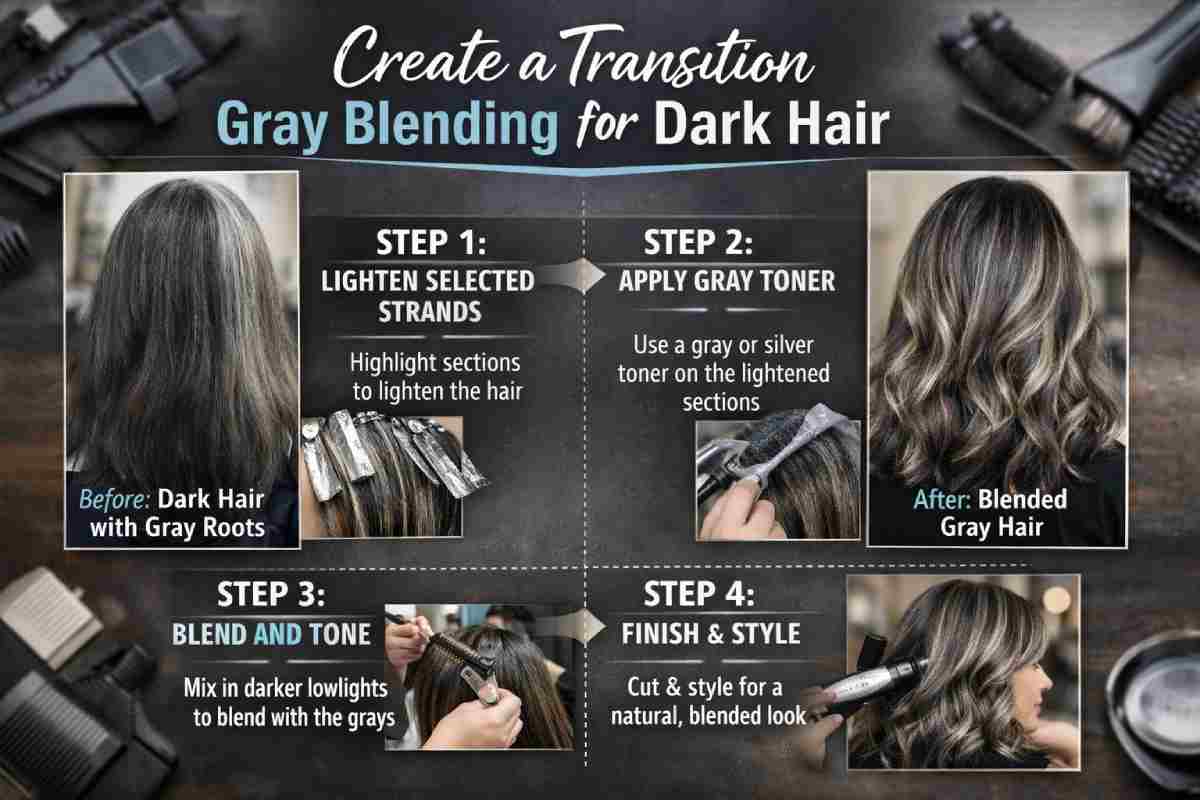
The gray blending process typically begins with a consultation where the stylist evaluates the percentage of gray hair, previous color treatments, and desired outcome. This step is crucial for developing a personalized plan.
During the first session, the stylist applies highlights or balayage to begin the blending process. Over multiple sessions, the hair is gradually lightened and toned to achieve a natural transition. Maintenance appointments are spaced further apart compared to traditional coloring methods.
Gray Blending Timeline
| Stage | Duration | Description |
| Consultation | 30–60 minutes | Hair assessment and planning |
| First Session | 2–4 hours | Initial blending |
| Transition Phase | 3–6 months | Gradual lightening |
| Full Blend | 6–12 months | Seamless gray integration |
| Maintenance | Every 3–6 months | Touch-ups and toning |
Benefits of Gray Blending
Gray blending offers several advantages that make it an appealing option for individuals with dark hair. One of the biggest benefits is reduced maintenance, as the blended look grows out naturally without harsh root lines.
Another advantage is the natural appearance it provides. Instead of a flat, single color, gray blending creates depth and dimension. It is also less damaging to hair since it requires fewer chemical treatments over time. Although the initial cost may be higher, the long-term savings from fewer salon visits make it cost-effective.
Benefits at a Glance
| Benefit | Description |
| Low Maintenance | Fewer salon visits required |
| Natural Look | Multi-dimensional color |
| Healthier Hair | Reduced chemical exposure |
| Cost Efficiency | Lower long-term expenses |
Cost of Gray Blending in the United States
The cost of gray blending varies widely depending on factors such as location, salon reputation, and hair length. Urban areas like New York or Los Angeles typically have higher prices compared to smaller cities.
Initial sessions are usually more expensive because they involve detailed work and multiple techniques. However, maintenance costs are lower compared to traditional coloring methods.
Average Cost in the U.S.
| Service Type | Price Range (USD) |
| Consultation | $0 – $100 |
| Initial Session | $150 – $500 |
| Advanced Correction | $300 – $800 |
| Maintenance | $100 – $300 |
Maintenance and Hair Care
Proper maintenance is essential to keep gray-blended hair looking fresh and vibrant. Using the right products helps maintain tone and prevent brassiness.
Purple shampoos are commonly used to neutralize yellow tones, while deep conditioning treatments keep the hair hydrated. Heat styling should be minimized, and protective products should always be used when styling.
Hair Care Routine
| Product Type | Frequency | Purpose | |
| Purple Shampoo | 1–2 times/week | Remove yellow tones | |
| Conditioner | Every wash | Maintain moisture | |
| Hair Mask | Weekly | Strengthen hair | |
| Heat Protectant | Before styling | Prevent heat damage |
Common Mistakes to Avoid
Many people expect instant results from gray blending, but it is a gradual process that requires patience. Choosing an inexperienced stylist can also lead to uneven results or damage.
Over-processing the hair is another common issue, as excessive lightening can weaken hair structure. Neglecting aftercare can also affect the longevity of the blend.
Mistakes and Solutions
| Mistake | Impact | Solution |
| Expecting quick results | Disappointment | Plan for gradual transition |
| Poor stylist choice | Uneven blending | Choose experienced professionals |
| Over-processing | Hair damage | Limit chemical treatments |
| Ignoring maintenance | Dull appearance | Follow care routine |
Gray Blending vs Traditional Coloring
Gray blending differs significantly from traditional hair dyeing methods. While traditional coloring focuses on full coverage, gray blending emphasizes integration and natural appearance.
Comparison
| Feature | Gray Blending | Traditional Dye |
| Coverage | Partial | Full |
| Maintenance | Low | High |
| Appearance | Natural | Uniform |
| Root Growth | Less noticeable | Highly visible |
| Hair Health | Better | More damage |
Professional vs At-Home Options
While at-home kits may seem convenient, they often lack the precision required for effective gray blending, especially for dark hair. Professional stylists have the expertise and tools needed to achieve a seamless result.
Professional vs DIY
| Factor | Professional Salon | At-Home Kits |
| Results | High quality | Variable |
| Safety | Safer | Risky |
| Customization | Personalized | Limited |
| Cost | Higher upfront | Lower |
Conclusion
Transition gray blending for dark hair is a modern, practical solution for those looking to embrace their natural gray hair without sacrificing style. In the United States, this technique continues to grow in popularity due to its low-maintenance nature and natural results.
By combining advanced coloring techniques with proper maintenance, individuals can achieve a smooth and elegant transition. While the process requires time and professional expertise, the long-term benefits make it a worthwhile investment for anyone ready to embrace their gray hair confidently.