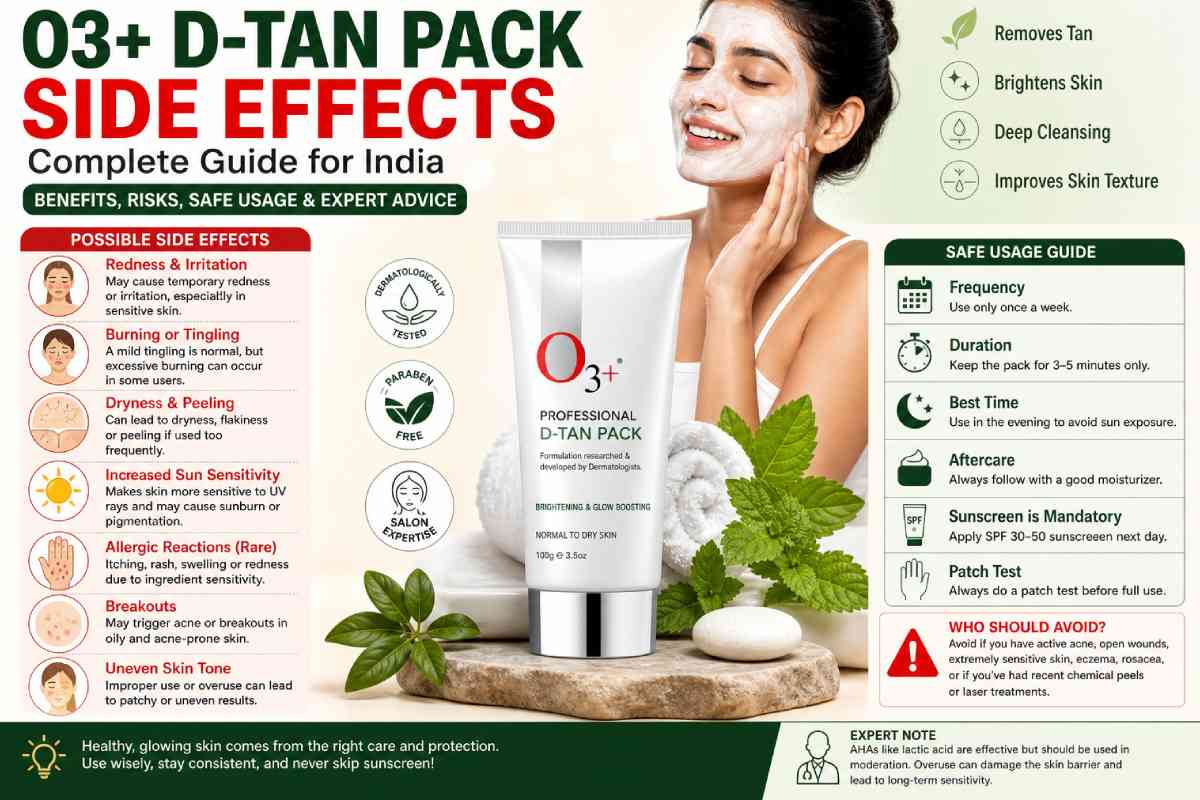
The O3+ D-Tan Pack by O3+ Professional Skincare is quite a popular product in India, offering the promise of instant tan removal and clearer, brighter-looking skin. Available for both salon and home use, the product is highly sought after by people who work and spend considerable time outdoors in the harsh Indian sun, pollution and humidity. The product can produce visible results in a relatively short time, but this has also led to concerns from users about possible adverse effects, especially with overuse or improper application.
In this detailed guide, we answer all your questions about O3+ D-Tan Pack side effects in the Indian context. We discuss possible causes, risk factors, safe use, skincare precautions and what you should know before adding the product to your routine.
Table of Contents
What Is O3+ D-Tan Pack and How Does It Work?
O3+ D-Tan Pack is a topical skincare treatment marketed to help reduce the appearance of sun tan and brighten the skin. It contains ingredients including lactic acid, an alpha hydroxy acid (AHA), along with other ingredients such as mint, eucalyptus and pea extracts.
Lactic acid helps loosen and exfoliate dead skin cells from the surface of the skin, which can make the complexion appear smoother and brighter. However, exfoliation can also increase irritation or dryness when the product is used too frequently or applied incorrectly.
People who regularly use exfoliating products may also want to understand how different skincare treatments work together. For example, Qure Skincare discusses another approach to maintaining a targeted skincare routine.
Common Side Effects of O3+ D-Tan Pack
Side effects can vary depending on skin type, frequency of application and external factors such as temperature and UV exposure. While many reactions are mild and temporary, persistent irritation should not be ignored.
Overview of Side Effects
| Side Effect | Description | Severity | Who Is at Risk |
| Redness | Skin appears flushed or irritated after use | Mild | Sensitive skin |
| Burning sensation | Tingling or stinging feeling | Mild–Moderate | First-time or sensitive users |
| Dryness | Skin feels tight or flaky | Moderate | Dry skin types |
| Sun sensitivity | Increased susceptibility to UV-related irritation | High | All users |
| Allergic reaction | Rash, itching or swelling | Rare | Allergy-prone users |
| Breakouts | Acne or pimples may appear | Moderate | Acne-prone skin |
| Uneven tone | Patchy skin appearance | Mild–Moderate | Incorrect or uneven use |
Skin Irritation and Redness
Sore, red or irritated skin is one of the more common reactions that can occur with exfoliating products. Lactic acid helps loosen dead skin cells, but it can also irritate the skin, particularly when used too frequently or on sensitive skin.
India’s hot and humid climate can make skincare irritation more noticeable, particularly when combined with sweating and prolonged sun exposure. Reactive, sensitive and compromised skin may develop redness shortly after application. Repeated irritation can also contribute to a weakened skin barrier.
Using a gentle cleanser as part of your routine can help avoid unnecessary irritation. A product such as CeraVe Foaming Facial Cleanser can be considered when choosing a cleanser suited to normal-to-oily skin, although individual skin needs vary.
Burning or Tingling Sensation
A mild tingling sensation can occur when using an exfoliating product containing acids. However, a strong or persistent burning sensation is not something to ignore. It may indicate that the product is irritating your skin or has been left on for too long.
The sensation can be more pronounced if the product is applied to broken, sunburned or recently treated skin. Using an exfoliating product when the skin is already irritated from heat or sun exposure may further increase discomfort.
If you experience significant burning, wash the product off and discontinue use until your skin has recovered. Persistent symptoms may require advice from a dermatologist.
Dryness and Skin Peeling
Although the product may contain ingredients intended to support the skin, exfoliation can leave some users feeling dry or tight. This can happen when surface oils and dead skin cells are removed during exfoliation.
Regular moisturising is therefore an important part of aftercare. Our guide on how to apply moisturiser on your face explains how moisturiser can be incorporated into a daily skincare routine.
Dryness Risk Factors
| Factor | Impact on Skin |
| Frequent use | May increase dryness and irritation |
| No moisturiser | Can worsen tightness and flakiness |
| Dry skin type | Higher risk of irritation |
| Air-conditioned environment | May contribute to skin dehydration |
Over time, excessive dryness can contribute to peeling, rough texture and increased sensitivity if the skin is not given enough time to recover.
Increased Sun Sensitivity
Another important concern is increased sensitivity to sunlight. Lactic acid is an AHA, and exfoliating acids can make the skin more vulnerable to UV-related irritation when used incorrectly or without adequate sun protection.
This is particularly relevant in India, where UV exposure can be significant throughout the year. After exfoliation, the skin should be protected from excessive sun exposure, and a broad-spectrum sunscreen should be used during the day.
Failing to protect the skin may increase the likelihood of sunburn and can contribute to post-inflammatory hyperpigmentation, particularly in people prone to pigmentation.
For people interested in exfoliating acids, it is also useful to understand how other AHA products work. The Ordinary Glycolic Acid 7% Toning Solution is another example of an exfoliating acid product that should be introduced carefully and not unnecessarily combined with multiple exfoliating treatments.
Allergic Reactions
Although uncommon, some people may develop an allergic or sensitivity reaction to one or more ingredients, including fragrance or botanical extracts. A reaction can sometimes occur even if you have previously used a product without experiencing problems.
Signs of Allergic Reaction
| Symptom | What It May Indicate |
| Itching | Skin irritation or sensitivity |
| Swelling | Inflammatory or allergic response |
| Red patches | Irritation or possible allergy |
| Rash | Ingredient sensitivity |
A patch test before full application can help identify potential sensitivity, although it cannot guarantee that an allergic reaction will not occur.
If you develop significant swelling, blistering, breathing difficulty or a rapidly spreading rash, seek medical attention promptly.
Breakouts and Acne
Some users, particularly those with oily or acne-prone skin, may notice breakouts after introducing a new skincare product. However, this does not necessarily mean that the skin is undergoing a beneficial “purging” process.
Irritation, unsuitable ingredients or disruption of the skin barrier can all contribute to blemishes. In humid climates, sweat and excess oil may also make existing acne more noticeable.
Anyone with active acne should be particularly cautious about applying strong exfoliating products over inflamed or damaged skin.
Uneven Skin Tone or Patchiness
Uneven tone or patchiness can occur when the product is applied inconsistently or used too frequently. Some areas may receive more product or remain in contact with the formulation for longer than others.
Causes of Uneven Results
| Cause | Result |
| Uneven application | Patchy-looking brightness |
| Overuse | Irritation and pigmentation concerns |
| Skipping aftercare | Increased dryness or sensitivity |
| Sun exposure | Increased pigmentation risk |
If your main concern is pigmentation or uneven skin tone, it is better to build a consistent routine rather than repeatedly applying stronger exfoliating treatments.
Who Should Avoid O3+ D-Tan Pack?
Although many people may tolerate exfoliating products, some individuals should use them particularly cautiously or seek professional advice first.
These include people with:
- Very sensitive or reactive skin
- Active or inflamed acne
- Eczema or rosacea
- Open wounds or damaged skin
- Recent sunburn
- Recently performed chemical peels
- Recent laser or other resurfacing treatments
If you have recently undergone a professional skin treatment, follow the aftercare instructions provided by your dermatologist or skincare professional rather than immediately introducing an exfoliating product.
Safe Usage Guidelines for Indian Users
Using the O3+ D-Tan Pack according to the product’s instructions can help reduce the likelihood of irritation. Because UV exposure and heat can be significant in India, sun protection and proper aftercare are especially important.
Recommended Usage
| Parameter | Good Practice |
| Frequency | Follow the product instructions and avoid overuse |
| Duration | Follow the manufacturer’s recommended application time |
| Time | Evening can help reduce immediate sun exposure |
| Aftercare | Moisturiser and daytime sunscreen |
| Patch test | Recommended before first use |
Avoid leaving the product on for longer than instructed in an attempt to achieve faster results. More exfoliation does not necessarily mean better or faster results.
After using an exfoliating treatment, keep the rest of your skincare routine relatively simple and avoid immediately layering multiple strong acids or irritating treatments.
Benefits vs Risks
The O3+ D-Tan Pack may appeal to users looking for a quick way to improve the appearance of a sun-tanned complexion, but the potential benefits should be balanced against the possibility of irritation.
| Aspect | Potential Benefits | Potential Risks |
| Skin tone | Brighter-looking complexion | Uneven tone |
| Texture | Smoother-feeling skin | Dryness |
| Tan appearance | May reduce the appearance of superficial tanning | Irritation or sensitivity |
| Convenience | Easy to incorporate when used correctly | Misuse-related problems |
The benefits are more likely to be maintained when the product is used as directed and combined with consistent sun protection and moisturisation.
Alternatives to O3+ D-Tan Pack
If you experience irritation after using the product, consider pausing exfoliation and focusing on gentle skincare until the skin recovers.
Gentler options may include a simple cleanser, moisturiser and broad-spectrum sunscreen. Ingredients such as aloe vera may provide a soothing skincare experience for some people, although “natural” does not automatically mean irritation-free.
It is also important not to combine several exfoliating products simply because they target similar concerns. For example, using an AHA toner together with another exfoliating pack may increase the overall exfoliation load on the skin.
Comparison with Alternatives
| Feature | O3+ D-Tan Pack | Gentle Skincare Routine |
| Speed | May provide a quicker visible effect | Usually gradual |
| Cost | Moderate | Can range from low to moderate |
| Approach | Exfoliation-focused | Barrier and sun-protection focused |
| Irritation potential | Possible | Generally lower when products are suitable |
| Long-term focus | Tan/brightness concerns | Overall skin maintenance |
For long-term skin health, consistent sun protection and a suitable skincare routine are generally more important than repeatedly relying on strong exfoliation.
How to Build a Better Routine Around D-Tan Products
If you use an exfoliating treatment, the rest of your routine should avoid unnecessary irritation.
A simple routine could include a gentle cleanser, a suitable moisturiser and sunscreen during the day. On days when you use an exfoliating treatment, avoid adding several other exfoliating or potentially irritating products unless a skincare professional has advised you to do so.
LED skincare devices are another category that some users explore for their skincare routines. For example, Omnilux Mask provides information about LED light therapy and how it differs from exfoliating treatments. It should not, however, be viewed as a direct replacement for sun protection or appropriate treatment of skin conditions.
CeraVe vs The Ordinary for Different Skincare Needs
People looking for alternatives to a D-Tan product may also compare different skincare brands and active ingredients. The choice should depend on your specific concern rather than simply selecting the strongest product.
This CeraVe vs The Ordinary skincare comparison explores how the two brands approach skincare differently. CeraVe tends to focus strongly on cleansing and barrier support, while The Ordinary offers a broad range of targeted active ingredients.
Understanding this distinction can help you avoid building a routine that contains too many exfoliating or active products at the same time.
Dermatologist Advice
Dermatologists generally recommend approaching exfoliation carefully and avoiding excessive use. Over-exfoliation can cause dryness, irritation and increased sensitivity, particularly when several active products are combined.
Sun protection is particularly important when using products containing AHAs. A broad-spectrum sunscreen, protective clothing and sensible sun avoidance can help reduce UV exposure and the risk of pigmentation.
If you experience persistent redness, severe burning, swelling, blistering or worsening pigmentation after using the product, stop using it and consult a dermatologist.
Final Verdict
The O3+ D-Tan Pack may be useful for people looking to improve the appearance of a sun-tanned or dull complexion, but it is not completely free from potential side effects.
Dryness, mild redness and temporary tingling can occur, particularly in sensitive skin. More significant problems, including prolonged irritation, increased sun sensitivity and pigmentation concerns, are more likely when the product is overused or applied incorrectly.
The safest approach is to follow the manufacturer’s instructions, avoid over-exfoliation, moisturise regularly and use adequate sunscreen during the day. If your skin is sensitive, damaged or affected by an existing skin condition, professional advice is preferable before using an exfoliating D-Tan treatment.
When used appropriately, the product can be part of a skincare routine, but brighter-looking skin should never come at the expense of a healthy skin barrier.