
Transitioning to high protein snacks is one of the most effective ways to improve dietary habits in the United States. With busy lifestyles, many Americans rely on quick, convenient snacks that are often high in sugar, refined carbohydrates, and unhealthy fats. The concept of “transition high protein snacks” focuses on replacing these traditional options with nutrient-dense alternatives that support better health, sustained energy, and overall wellness.
Protein plays a critical role in the body by supporting muscle repair, hormone production, and metabolic function. More importantly, it promotes satiety, helping individuals feel fuller for longer periods. This makes high protein snacks especially useful for weight management and preventing overeating. As awareness of nutrition grows in the U.S., more people are adopting protein-rich snacks as part of their daily routine, whether for fitness, health improvement, or convenience.
One of the main advantages of transitioning to high protein snacks is improved energy stability. Unlike sugary snacks that cause rapid spikes and crashes in blood sugar, protein-based foods digest more slowly, providing a steady release of energy. This is particularly beneficial for students, professionals, and athletes who need consistent performance throughout the day. Additionally, protein supports lean muscle mass, which is essential for both active individuals and aging populations.
Table of Contents
Types of High Protein Snacks
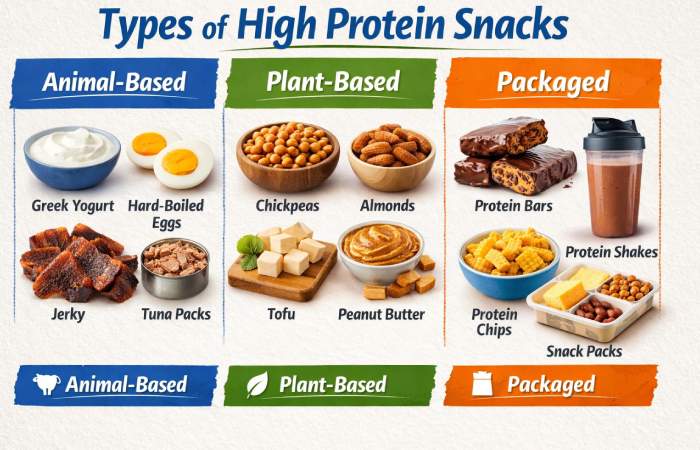
High protein snacks in the United States can be broadly categorized into animal-based, plant-based, and packaged options. Each category offers unique benefits, and a balanced approach often includes a mix of all three.
Animal-Based Protein Snacks
Animal-based snacks are considered complete protein sources because they contain all essential amino acids required by the body. These options are widely available across U.S. grocery stores and are known for their high protein density and nutritional value.
| Snack Type | Protein Content | Key Benefits | Common Usage |
| Greek Yogurt | 10–20g per serving | Probiotics, calcium | Breakfast or snack |
| Hard-Boiled Eggs | ~6g each | Portable, affordable | On-the-go |
| Beef/Turkey Jerky | 9–12g per ounce | Long shelf life | Travel snack |
| Cottage Cheese | ~14g per ½ cup | Slow-digesting protein | Evening snack |
| Tuna Packs | 20–50g per pack | High protein, omega-3 | Quick meal |
These snacks are especially popular among fitness enthusiasts due to their effectiveness in muscle recovery and satiety.
Plant-Based Protein Snacks
Plant-based protein snacks are gaining popularity in the United States, particularly among vegetarians, vegans, and health-conscious individuals. They not only provide protein but also deliver fiber, antioxidants, and essential micronutrients.
| Snack Type | Protein Content | Benefits | Ideal For |
| Roasted Chickpeas | ~7g per ½ cup | High fiber, crunchy | Vegan diets |
| Almonds | ~6g per ounce | Healthy fats | Quick snacks |
| Peanut Butter | ~7g per serving | Energy-rich | Versatile use |
| Tofu Cubes | ~9g per serving | Low fat | Plant-based meals |
| Lentil Snacks | ~9g per 100g | Budget-friendly | Meal prep |
These options are excellent for long-term health and are often more sustainable compared to animal-based sources.
Packaged High Protein Snacks
Packaged snacks dominate the U.S. market due to their convenience, but they require careful selection. While many products are marketed as “high protein,” they may also contain added sugars, preservatives, or excess sodium.
| Product Type | Protein Range | Advantages | Drawbacks |
| Protein Bars | 10–20g | Easy to carry | May contain sugar |
| Protein Shakes | 15–30g | Quick intake | Processed |
| Protein Chips | 10–15g | Snack alternative | High sodium |
| Snack Packs | 8–15g | Portion control | Expensive |
Reading nutrition labels is essential when choosing packaged snacks to ensure they align with health goals.
Transition Strategy to High Protein Snacks
Making the transition to high protein snacks should be gradual and sustainable. Instead of completely overhauling your diet overnight, start by replacing one unhealthy snack at a time. For example, swap chips with roasted chickpeas or replace sugary yogurt with Greek yogurt. These small changes can have a significant impact over time.
Planning is another key factor. Preparing snacks in advance reduces the likelihood of reaching for unhealthy options. Combining protein with fiber and healthy fats—such as pairing nuts with fruit—can further enhance satiety and nutritional balance. It is also important to pay attention to portion sizes and overall calorie intake, as some protein-rich foods can be calorie-dense.
Sample Transition Plan
| Current Snack | High Protein Alternative | Protein Gain |
| Potato Chips | Roasted Chickpeas | +5g |
| Candy Bar | Protein Bar | +10g |
| Sugary Yogurt | Greek Yogurt | +8g |
| Cookies | Nuts + Fruit | +6g |
| White Bread Sandwich | Turkey Roll-Ups | +10g |
This structured approach helps individuals gradually adapt to healthier eating habits without feeling restricted.
High Protein Snacks for Different Goals
Different individuals have different nutritional goals, and high protein snacks can be tailored accordingly. For weight loss, low-calorie yet filling options like Greek yogurt or eggs are ideal. For muscle gain, higher protein intake from sources like protein shakes or chicken wraps is more appropriate. Meanwhile, those with busy lifestyles benefit from portable options like jerky or protein bars.
Goal-Based Snack Options
| Goal | Snack | Protein | Benefit |
| Weight Loss | Greek Yogurt + Berries | 15–20g | Low calorie, filling |
| Weight Loss | Eggs | 6g each | Reduces hunger |
| Muscle Gain | Protein Shake | 20–30g | Fast recovery |
| Muscle Gain | Tuna Packs | 20g+ | High protein |
| Busy Lifestyle | Jerky | 9–12g | Portable |
| Busy Lifestyle | Protein Bars | 10–20g | Convenient |
By aligning snack choices with personal goals, individuals can maximize the benefits of protein intake.
Nutritional Guidelines in the United States
In the United States, general dietary recommendations suggest consuming approximately 0.8 grams of protein per kilogram of body weight. However, this requirement increases for active individuals, athletes, and those aiming to build muscle. Experts also recommend distributing protein intake evenly throughout the day, including during snack times.
Snacks should ideally provide at least 5–10 grams of protein to be effective. This ensures that the body receives a steady supply of amino acids, supporting metabolism and muscle maintenance. Additionally, choosing snacks with minimal added sugars and artificial ingredients contributes to better long-term health outcomes.
Budget-Friendly High Protein Snacks
Transitioning to high protein snacks does not have to be expensive. Many affordable options are readily available in the United States and can be incorporated into daily routines without increasing grocery costs.
| Budget Snack | Protein Content | Cost Efficiency |
| Eggs | 6g each | Very low cost |
| Lentils | 9g per 100g | Affordable |
| Peanut Butter | 7g per serving | Budget-friendly |
| Canned Tuna | 20g+ | Good value |
| Yogurt | 10g | Moderate cost |
These options make it easier for individuals and families to adopt healthier eating habits without financial strain.
Common Mistakes to Avoid
While transitioning to high protein snacks is beneficial, there are some common pitfalls to watch out for. Many people rely too heavily on processed protein products, which can contain hidden sugars and additives. Others may ignore calorie content, leading to unintended weight gain. Lack of variety is another issue, as consuming the same foods repeatedly can result in nutrient deficiencies.
Focusing on whole foods, maintaining balance, and being mindful of portion sizes are essential for long-term success. Variety ensures that the body receives a wide range of nutrients, while moderation prevents overconsumption.
Final Thoughts
Transitioning to high protein snacks in the United States is a practical and effective way to improve overall nutrition. By gradually replacing unhealthy snacks with protein-rich alternatives, individuals can experience better energy levels, improved satiety, and enhanced physical health. The key lies in consistency, smart choices, and a balanced approach that includes both whole and convenient options.
With proper planning and awareness, high protein snacking can become a sustainable habit that supports long-term wellness and a healthier lifestyle.